
America's Food System Is
Making Us Sick—And We Can
Fix It.
We spend $4.5 trillion annually treating diseases that food could
prevent. It's time to build a system where vitality is the default, not
the exception.

How We Got Here: A System Out of Sync
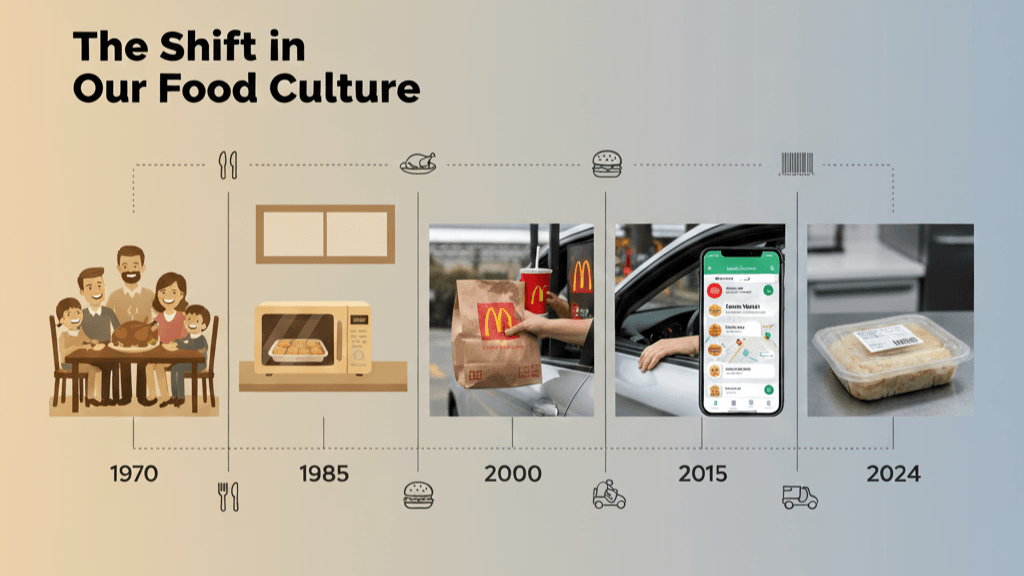
Over the past 50 years, ultra-processed foods have quietly replaced wholesome, home-cooked
meals as the American default. What was once occasional convenience became the daily norm—not
because families stopped caring, but because the system made it nearly impossible to choose otherwise.
Today, we're witnessing chronic diseases in high school-aged children that were once
considered 'adult conditions.' Type 2 diabetes, fatty liver disease, and metabolic syndrome
now appear in teenagers. This isn't a failure of willpower—it's a systemic issue that demands
systemic solutions.
1 in 5
American children and adolescents now have obesity
60%
of young adults have at least one chronic disease risk factor
95%
increase in Type 2 diabetes diagnoses in youth over two decades

Today, we're witnessing chronic diseases in high school-aged children that were once
considered 'adult conditions.' Type 2 diabetes, fatty liver disease, and metabolic syndrome
now appear in teenagers. This isn't a failure of willpower—it's a systemic issue that demands
systemic solutions.

We cannot wait for a government answer. Policy moves slowly. Market forces move fast. The organizations and individuals who act now—who build the infrastructure for food-as-medicine, who prove the business case for vitality, who demonstrate that healthy can be easy—will shape the next 50 years of American health.
"The question isn't whether the system will change. It's
whether we'll be passive observers or active builders of what
comes next."

What If the System Worked FOR Us?
Imagine an America where the healthiest choice is also the easiest choice. Where economic
incentives reward vitality instead of treating disease. Where food-as-medicine isn't an elite
luxury but a cultural norm. This isn't utopian thinking—it's practical systems redesign. Here's
what success looks like: